
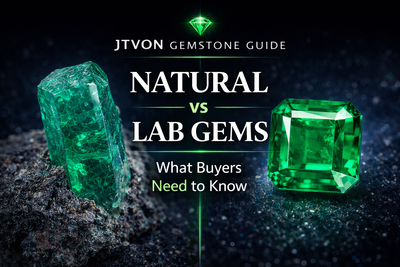
Natural vs Lab-Created Gemstones: What Buyers Need to Know
JTVON on 14th Sep 2025
Natural vs Lab-Created Gemstones: Understanding the Difference
When people shop for gemstone jewelry, one of the most important questions isn’t size or color — it’s origin.
Was the gemstone formed naturally in the Earth over millions of years, or was it grown in a laboratory in a matter of weeks?
Both natural and lab-created gemstones can be beautiful. Both can display exceptional color and brilliance. But they are not the same in terms of formation, rarity, and long-term value.
Understanding the difference helps buyers make informed decisions when choosing gemstone jewelry.
Born of Earth vs. Born in a Laboratory
Natural Gemstones
Natural gemstones form within the Earth through geological processes that can take millions of years.
Heat, pressure, chemical reactions, and mineral growth deep within the crust or mantle slowly create crystals such as sapphire, ruby, emerald, and diamond. These natural growth conditions often produce internal features known as inclusions, which gemologists use to identify a gemstone’s origin.
These inclusions are often considered a fingerprint of the stone’s natural history.
Lab-Created Gemstones
Lab-created gemstones are grown in controlled laboratory environments that replicate the conditions under which natural crystals form.
Scientists can reproduce these environments using methods such as:
-
Flame fusion
-
Flux growth
-
Hydrothermal growth
-
Czochralski pulling
Lab-created gemstones have the same chemical composition and crystal structure as their natural counterparts. Because of this, they can appear nearly identical to natural stones.
The key difference is simply where and how the crystal formed.
Value and Rarity
One of the most important differences between natural and lab-created gemstones is rarity.
Natural gemstones are limited by geological supply. Fine rubies, emeralds, and sapphires occur in relatively small quantities, and high-quality stones can become extremely scarce.
This rarity contributes to their collectible value and long-term demand.
Lab-created gemstones, by contrast, can be produced in larger quantities whenever manufacturing facilities create them. Because supply can expand easily, lab-grown stones generally do not hold the same resale value as natural gemstones.
For buyers seeking rarity or collectability, natural gemstones tend to be preferred.
For buyers seeking maximum visual impact at a lower cost, lab-created gemstones can be an attractive option.
Appearance: Natural Character vs. Laboratory Perfection
Natural gemstones often contain internal features such as:
-
mineral inclusions
-
growth zoning
-
tiny fractures
-
crystal inclusions
To gemologists, these characteristics can provide valuable information about a gemstone’s origin and formation.
Lab-created gemstones frequently appear very clean or nearly flawless, because their growth environment is tightly controlled.
Some buyers appreciate the distinctive individuality of natural stones, while others prefer the consistent appearance of laboratory-grown gems.
Identification and Disclosure
One important aspect of the gemstone market is proper identification and disclosure.
Gemological laboratories and trained gemologists can identify whether a gemstone is natural or laboratory-grown by examining:
-
growth patterns
-
internal inclusions
-
trace elements
-
advanced spectroscopy
Reputable jewelers clearly disclose whether a gemstone is natural or lab-created so buyers can make informed decisions.
Transparency is essential in maintaining trust in the gemstone market.
Are Lab-Created Gemstones “Real”?
This question often causes confusion.
Lab-created gemstones are real gemstones in a scientific sense because they share the same chemical composition and crystal structure as natural stones.
However, they are not natural gemstones.
In the jewelry industry, the distinction between natural and laboratory-created stones is important because origin influences rarity, value, and collector demand.
Which Option Is Right for You?
The choice between natural and lab-created gemstones depends on personal priorities.
Buyers who value rarity, geological history, and long-term collectability often prefer natural gemstones.
Buyers who prioritize visual beauty and affordability may prefer lab-created gemstones.
Both options can produce beautiful jewelry when they are accurately described and properly disclosed.
Frequently Asked Questions About Natural and Lab-Created Gemstones
Are lab-created gemstones fake?
No. Lab-created gemstones are genuine crystals with the same chemical composition and physical properties as natural gemstones. The difference is that they are grown in laboratories rather than forming naturally in the Earth.
Can you tell the difference between natural and lab-grown gemstones?
In many cases, yes. Gemologists can identify growth structures, inclusions, and other features that reveal whether a gemstone formed naturally or in a laboratory.
Are lab-grown gemstones less expensive?
Generally yes. Because they can be produced more easily than natural gemstones, lab-created stones are usually significantly less expensive.
Do lab-created gemstones last as long as natural stones?
Yes. Lab-grown gemstones have the same physical durability as natural stones of the same species.
Do natural gemstones increase in value?
Some high-quality natural gemstones can appreciate over time due to rarity and collector demand. However, gemstone values vary widely depending on quality, origin, and market conditions.